Rethinking Leadership in an Unscripted World
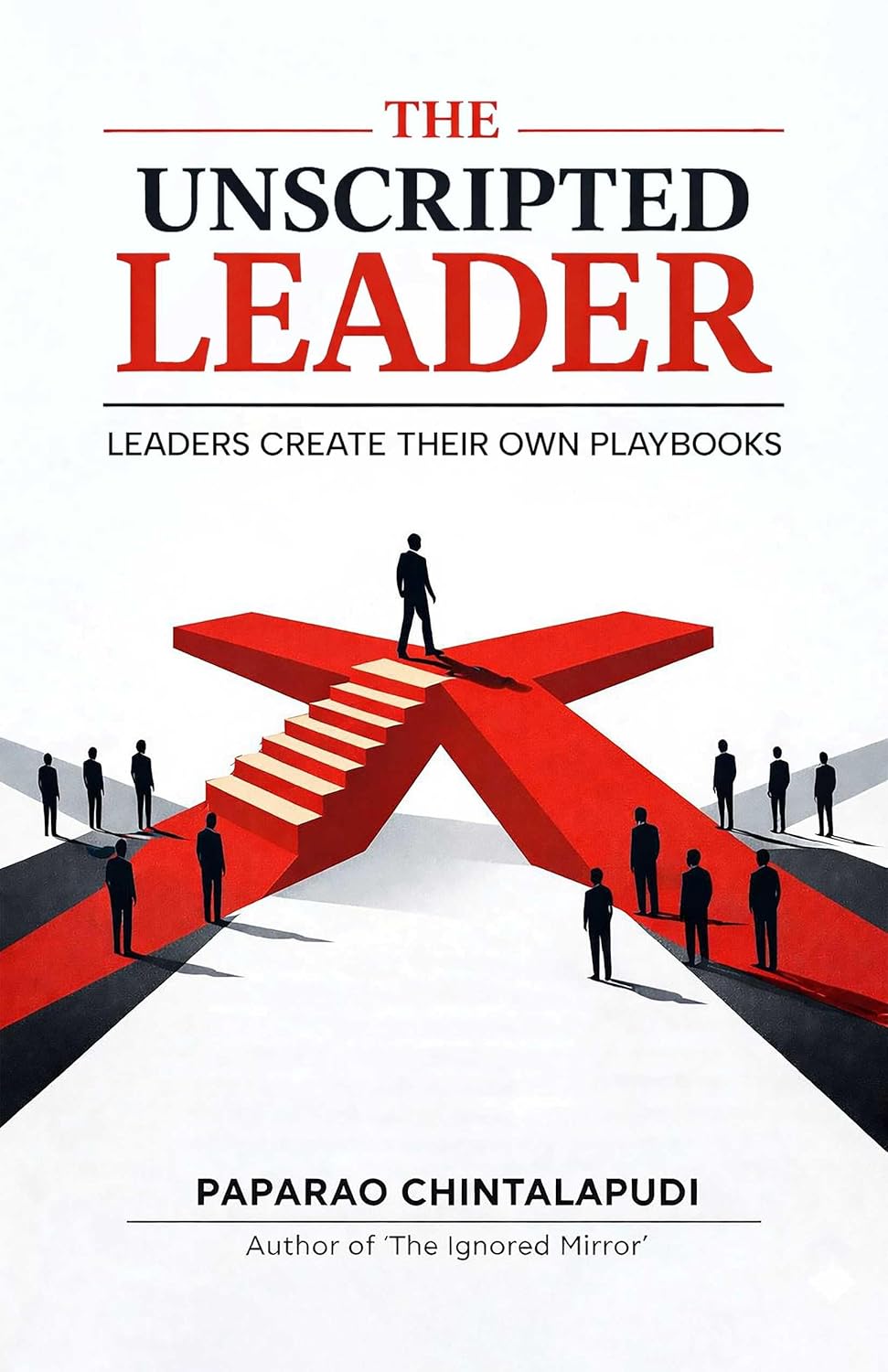
In an era defined by volatility, rapid change, and increasing complexity, leadership has moved far beyond traditional definitions. The predictable models and structured playbooks that once guided decision-making are no longer sufficient. THE UNSCRIPTED LEADER: Leaders Create Their Own Playbooks by Paparao Chintalapudi enters this landscape as a timely and thought-provoking work that challenges conventional leadership thinking and offers a more grounded, context-driven perspective.
Leadership Beyond Borrowed Frameworks
One of the central arguments of the book is that leadership today cannot rely on borrowed ideas or imported frameworks, particularly those developed in vastly different cultural and organisational contexts. Much of mainstream leadership literature has been shaped by Western corporate environments, often overlooking the complexities and nuances of emerging markets like India.
Chintalapudi addresses this gap by presenting a framework that is rooted in Indian realities. From navigating hierarchical systems to managing diverse teams and dealing with institutional constraints, the book reflects the everyday challenges faced by professionals in India. It makes a compelling case that effective leadership must be contextual, adaptive, and deeply aware of its environment.
The Power of Judgment in Leadership
At the heart of The Unscripted Leader lies the concept of judgment. Rather than focusing on authority, charisma, or technical expertise, the book positions judgment as the defining capability of modern leaders. In uncertain situations where there are no clear answers, the ability to decide what to hold on to, what to question, and what to let go becomes critical.
This emphasis on judgment shifts the conversation from “what leaders should do” to “how leaders should think.” It encourages readers to move beyond formulaic approaches and develop a deeper understanding of decision-making in complex environments.
The 4D Meta-Framework
A key highlight of the book is its structured 4D Meta-Framework, which integrates four essential dimensions of leadership. These include self-leadership and inner drivers, workplace dynamics and organisational realities, systems thinking, and strategic agility.
This framework provides a comprehensive lens through which leaders can evaluate situations and make informed decisions. By connecting internal clarity with external complexity, it reinforces the idea that leadership is not a set of isolated skills but an interconnected discipline.
Sixteen Foundational Leadership Moves
Building on the framework, the book introduces sixteen foundational leadership moves that serve as practical guides for action. These are not rigid rules or prescriptive steps but flexible principles designed to support better thinking and decision-making.
What makes these leadership moves particularly valuable is their adaptability. They allow leaders to respond to different situations without being constrained by fixed methodologies. This approach aligns well with the book’s broader philosophy of unscripted leadership-where flexibility and awareness take precedence over rigid adherence to models.
Learning Through Real-World Case Studies
Another significant strength of the book lies in its use of eight detailed case studies drawn from a wide range of sectors, including public institutions, healthcare, digital platforms, social enterprises, and energy. These case studies go beyond surface-level narratives to explore real dilemmas and complex decision-making scenarios.
They highlight the trade-offs, unintended consequences, and stakeholder dynamics that define real leadership challenges. By presenting situations without easy answers, the book allows readers to engage critically and develop their own perspectives. This practical grounding enhances the relevance and credibility of the insights presented.
A Self-Directed Leadership Journey
Unlike many business books that promise quick results, The Unscripted Leader positions itself as a long-term developmental tool. It does not offer shortcuts or instant solutions. Instead, it encourages readers to engage in a process of reflection, learning, and continuous improvement.
This makes the book particularly valuable for professionals who are serious about leadership growth. It supports the development of not just skills, but also mindset, character, and strategic thinking capabilities.
Who Should Read This Book
The book is especially relevant for managers transitioning into leadership roles, entrepreneurs scaling their organisations, senior executives strengthening their leadership capabilities, and public sector leaders navigating institutional complexity. It also appeals to professionals who are committed to understanding leadership at a deeper level rather than simply applying surface-level techniques.
A Meaningful Contribution to Leadership Literature
In a crowded market of leadership books, THE UNSCRIPTED LEADER stands out for its depth, clarity, and contextual relevance. It avoids clichés and instead offers a serious, well-structured approach to understanding leadership in uncertain times.
For readers seeking a thoughtful and practical guide that reflects real-world challenges, this book provides a valuable roadmap. It does not attempt to script leadership but instead empowers individuals to create their own path with confidence, clarity, and informed judgment.