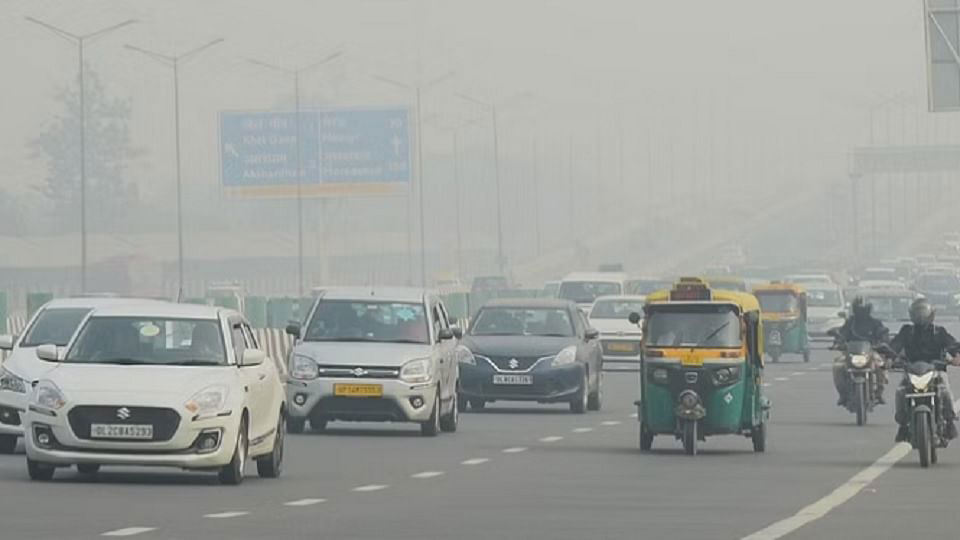
No fuel without PUC: In a major crackdown aimed at controlling worsening air quality, the Delhi government has enforced stringent anti-pollution measures from today. Under the new rules, vehicles without BS-VI engines will not be allowed to enter the national capital, and fuel stations will refuse fuel to vehicles that do not have a valid Pollution Under Control ( PUC ) certificate.
The move comes as Delhi continues to battle hazardous air pollution levels, with the Air Quality Index (AQI) remaining in the “Very Poor” to “Severe” category for weeks.
BS-VI Entry Rule to Impact 12 Lakh Vehicles Daily
According to official estimates, the decision is expected to affect nearly 12 lakh vehicles that enter Delhi daily from neighbouring NCR cities. These include over 4 lakh vehicles from Noida, around 2 lakh from Gurugram, and nearly 5.5 lakh from Ghaziabad, along with thousands from Faridabad.
Only vehicles that meet Bharat Stage VI (BS-VI) emission standards will now be permitted to enter the city. Older petrol and diesel vehicles that fail to comply with these norms will be turned back at border checkpoints.
No Fuel Without Valid PUC Certificate
As part of the enforcement, petrol pumps across Delhi will not dispense fuel to vehicles without a valid PUC certificate. Automatic Number Plate Recognition (ANPR) cameras installed at fuel stations will identify vehicles that do not meet emission requirements.
Authorities have warned fuel station owners of strict action if they fail to comply with the directive. Personnel from the Transport Department, Municipal Corporation, and Food Department have been deployed at petrol pumps to ensure proper implementation.
Massive Enforcement Drive Across Delhi
To ensure smooth enforcement of the new rules, the Delhi Police has deployed 580 police personnel, supported by 37 enforcement vans, across 126 checkpoints at Delhi-NCR border points.
These teams will conduct random vehicle checks, verify emission compliance, and prevent the entry of non-BS-VI vehicles. The government has said that the enforcement will continue as long as Stage IV of the Graded Response Action Plan (GRAP) remains in force.
Why the Measures Were Needed
Studies conducted by government agencies have revealed that vehicles contribute nearly 19.7% of PM10 and 25.1% of PM2.5 pollution during the winter months in Delhi. PM2.5 particles are especially dangerous as they can penetrate deep into the lungs and bloodstream, causing serious respiratory and cardiovascular diseases.
With pollution levels peaking every winter due to a combination of vehicular emissions, weather conditions, and stubble burning, authorities believe that restricting high-emission vehicles can bring immediate relief.
AQI Remains a Major Concern
Delhi’s air quality has remained alarming since November. On Wednesday at 4 pm, the city recorded a 24-hour average AQI of 334, placing it in the “Very Poor” category. Although slightly better than Tuesday’s reading of 354, the air quality continues to pose serious health risks.
Health experts have repeatedly warned residents to limit outdoor exposure, especially children, elderly people, and those with respiratory conditions.
Schools, Offices Face Restrictions
Due to the pollution emergency, physical classes have been discontinued for primary schools, while secondary and higher secondary schools have been given the option of online or physical classes. Offices have also been advised to function with only 50% staff on-site, encouraging work-from-home arrangements wherever possible.
Traffic Management and Long-Term Plans
The Delhi government has also intensified work on reducing traffic congestion. Authorities are addressing 100 identified traffic hotspots and working on an integrated traffic management system aimed at reducing waiting time at signals, thereby cutting vehicle emissions.
Officials say these long-term infrastructure improvements are critical to sustaining cleaner air beyond emergency measures.
Pollution Debate in Parliament
The issue of air pollution has also reached Parliament. Lok Sabha is scheduled to hold a discussion on pollution under Rule 193 today, following persistent demands from the Opposition. Union Environment Minister Bhupender Yadav is expected to respond to the debate at 5 pm, highlighting the seriousness of the issue at the national level.
A Crucial Step in Delhi’s Pollution Fight
The “No Fuel Without PUC ” and “No Entry for Old Vehicles” rules mark one of the strictest enforcement actions taken by the Delhi government in recent years. While commuters from NCR cities may face short-term inconvenience, authorities stress that public cooperation is essential to protect health and improve air quality.
As Delhi navigates yet another severe pollution season, the effectiveness of these measures will be closely watched by residents, environmentalists, and policymakers alike.