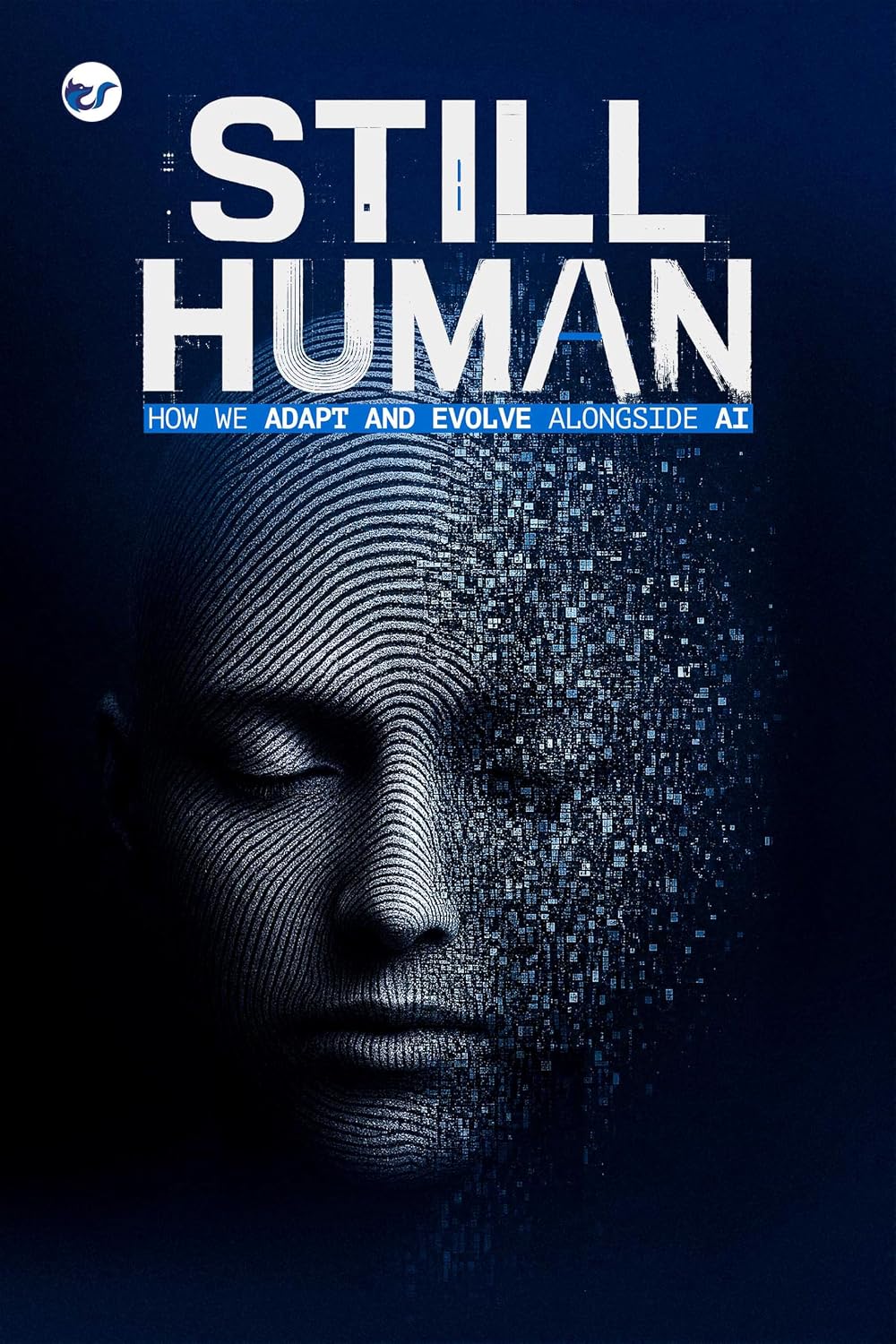
Still Human : How We Adapt and Evolve Alongside AI Artificial intelligence is no longer a distant concept limited to science fiction or technology laboratories. It has quietly become part of everyday life, helping us write, search, remember, communicate, create, and make decisions. As AI becomes increasingly capable of handling tasks that once required human effort, an important question emerges: while we are teaching machines to think more like us, are we slowly teaching ourselves to think less? L. Vasudevan’s Still Human: How We Adapt and Evolve Alongside AI explores this question with honesty, thoughtfulness, and a distinctly human perspective.
Beyond the Technology: Understanding the Human Impact
What makes Still Human particularly engaging is that it does not approach artificial intelligence purely as a technological subject. Instead, Vasudevan examines AI through the lens of human behaviour. As an advertising professional who understands attention, communication, and digital influence, the author offers an insightful perspective on how technology affects not only what we do but also how we think.
The book is accessible to readers regardless of their technical background. Rather than filling its pages with complicated terminology, it focuses on familiar experiences and everyday choices, making its larger arguments easy to understand and relate to.
The Hidden Cost of Convenience
One of the book’s strongest ideas is that the biggest impact of AI may not necessarily arrive through one dramatic technological breakthrough. It may happen through thousands of small decisions we make every day.
We ask AI to write something because it is faster. We rely on our phones to remember information because memorisation is no longer necessary. We allow algorithms to recommend what we watch, read, purchase, and consume. Each decision seems harmless on its own, but together they can gradually change our habits and abilities.
Vasudevan encourages readers to think about the hidden cost of this convenience. If machines continuously perform tasks for us, could some of our abilities slowly weaken simply because we no longer practise them?
Simple Stories, Powerful Questions
The book’s ideas become particularly powerful through relatable human examples. The story of a grandmother whose physical strength developed through years of drawing water provides a meaningful reflection on effort and capability. A task that was once simply part of daily life also developed physical resilience.
Similarly, the example of a mother who once memorised fifty phone numbers but later lost that ability because technology made memorisation unnecessary demonstrates how convenience can quietly change us.
These stories transform an abstract conversation about AI into something deeply personal. Instead of asking only whether AI will replace human jobs, the book asks a more fundamental question: what parts of ourselves might we voluntarily give away because machines can perform them more conveniently?
An Important Indian Perspective
Another major strength of Still Human is its distinctly Indian context. Much of the global discussion surrounding AI is shaped by perspectives from Silicon Valley and other technology-driven economies. Vasudevan brings the conversation closer to home by considering India’s unique relationship with technology.
India’s rapid technological adoption, diverse languages, cultural traditions, and strong social and family networks create a fascinating environment for examining AI’s influence. The country has repeatedly leapfrogged traditional systems, moving quickly from older methods to digital alternatives.
The book encourages readers to consider how this rapid transformation might affect different generations and communities, particularly in a society where technology and tradition often exist side by side.
Reclaiming Boredom and Independent Thought
Perhaps one of the most valuable ideas in the book is the importance of unstructured thought. In a world where information and answers are available within seconds, the ability to sit quietly, tolerate boredom, think independently, and work through uncertainty may become increasingly important.
Creativity does not always come from efficiency. Sometimes it emerges from boredom, curiosity, observation, mistakes, and having enough mental space to make unexpected connections.
Still Human reminds readers that not every moment needs to be optimised and not every problem needs an immediate technological solution.
A Call for Conscious AI Adoption
Importantly, the book does not simply reject AI or portray technology as the enemy. Instead, it encourages readers to develop a more conscious relationship with it. AI can be an incredibly powerful tool, but convenience should not automatically mean surrendering our abilities.
The challenge is to identify which tasks machines can handle effectively while deliberately protecting the human capabilities that matter most—memory, curiosity, creativity, critical thinking, attention, empathy, and independent thought.
Final Thoughts
Overall, Still Human: How We Adapt and Evolve Alongside AI is a timely and thought-provoking exploration of the relationship between technology and human behaviour. Its greatest strength lies in moving the AI conversation beyond automation, productivity, and technological progress and towards something more personal: what kind of humans do we want to remain as technology becomes increasingly capable?
For readers interested in artificial intelligence, digital culture, advertising, psychology, or the future of human behaviour, this book offers plenty of ideas to pause and reflect upon.