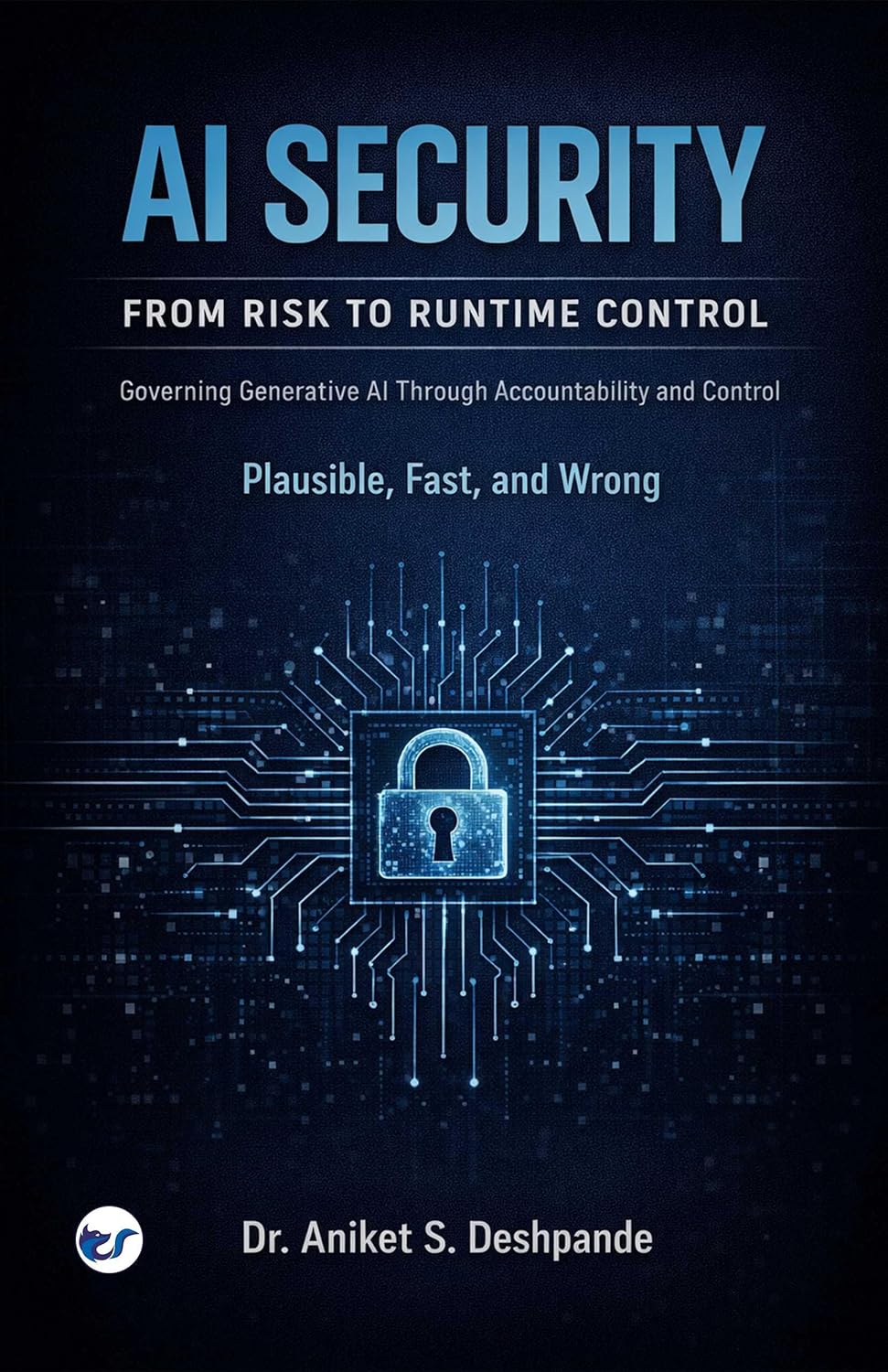
Artificial Intelligence is transforming industries at an unprecedented pace. From AI-powered copilots and chatbots to autonomous decision-making systems, organizations are rapidly embracing Generative AI to drive innovation and efficiency. However, as AI adoption grows, so do the risks. What happens when an AI system makes a critical mistake, leaks sensitive information, or becomes a target for cyberattacks?
In AI Security: From Risk to Runtime Control, Dr. Aniket Deshpande tackles these pressing questions with clarity, precision, and practical expertise. This insightful book goes beyond the hype surrounding artificial intelligence and focuses on what truly matters: securing AI systems, establishing accountability, and building governance frameworks that work in the real world.
Understanding the Risks Behind AI Innovation
Many businesses are rushing to implement AI solutions without fully understanding the security implications. Generative AI models can produce inaccurate outputs, expose confidential data, fall victim to prompt injection attacks, and create compliance challenges that impact entire organizations.
Dr. Deshpande explains these risks in a way that is accessible to both technical professionals and business leaders. Readers gain a comprehensive understanding of how AI systems fail, how attackers exploit vulnerabilities, and what organizations must do to protect themselves.
From Governance Policies to Operational Control
One of the book’s most compelling themes is accountability. As AI systems increasingly influence business decisions, organizations must be prepared to answer a critical question: Who is responsible when AI gets it wrong?
The author demonstrates how effective governance extends beyond policy documents and boardroom discussions. Through practical frameworks and operational strategies, the book shows readers how to establish ownership, implement controls, and create measurable oversight mechanisms that ensure AI is used responsibly.
Securing Generative AI in the Enterprise
Rather than focusing solely on theory, this book provides actionable guidance for securing AI environments. Topics such as prompt injection attacks, model manipulation, runtime enforcement, Zero Trust AI, AI incident response, and enterprise risk management are explained with remarkable clarity.
The practical recommendations make it easy for organizations to move from awareness to implementation, helping security teams build stronger defenses against emerging AI threats.
Preparing for the Future of AI Regulation
Governments and regulators worldwide are developing new standards for AI oversight. Organizations that fail to establish governance processes today may face significant compliance challenges tomorrow.
This book provides valuable insights into major frameworks such as NIST AI RMF, ISO 42001, and the EU AI Act. Readers learn how these regulations impact their organizations and how to build governance programs that align with evolving legal and compliance expectations.
A Roadmap for Building AI Governance
One of the standout features of the book is its practical 90-day roadmap for launching an AI governance framework. Whether an organization is just beginning its AI journey or already managing advanced AI deployments, the roadmap offers a structured path toward stronger security, accountability, and operational control.
Final Verdict
AI Security: From Risk to Runtime Control is more than a cybersecurity book—it is a strategic guide for navigating the future of artificial intelligence responsibly. Dr. Aniket Deshpande combines technical expertise, governance principles, and business insight to create a resource that is both informative and actionable.
For CISOs, security architects, compliance professionals, risk managers, technology executives, and organizations embracing AI-driven innovation, this book provides the knowledge and tools needed to secure AI systems, reduce risk, and establish meaningful accountability.
In a world where AI is already making decisions every day, this book helps organizations ensure those decisions remain secure, governed, and trustworthy.