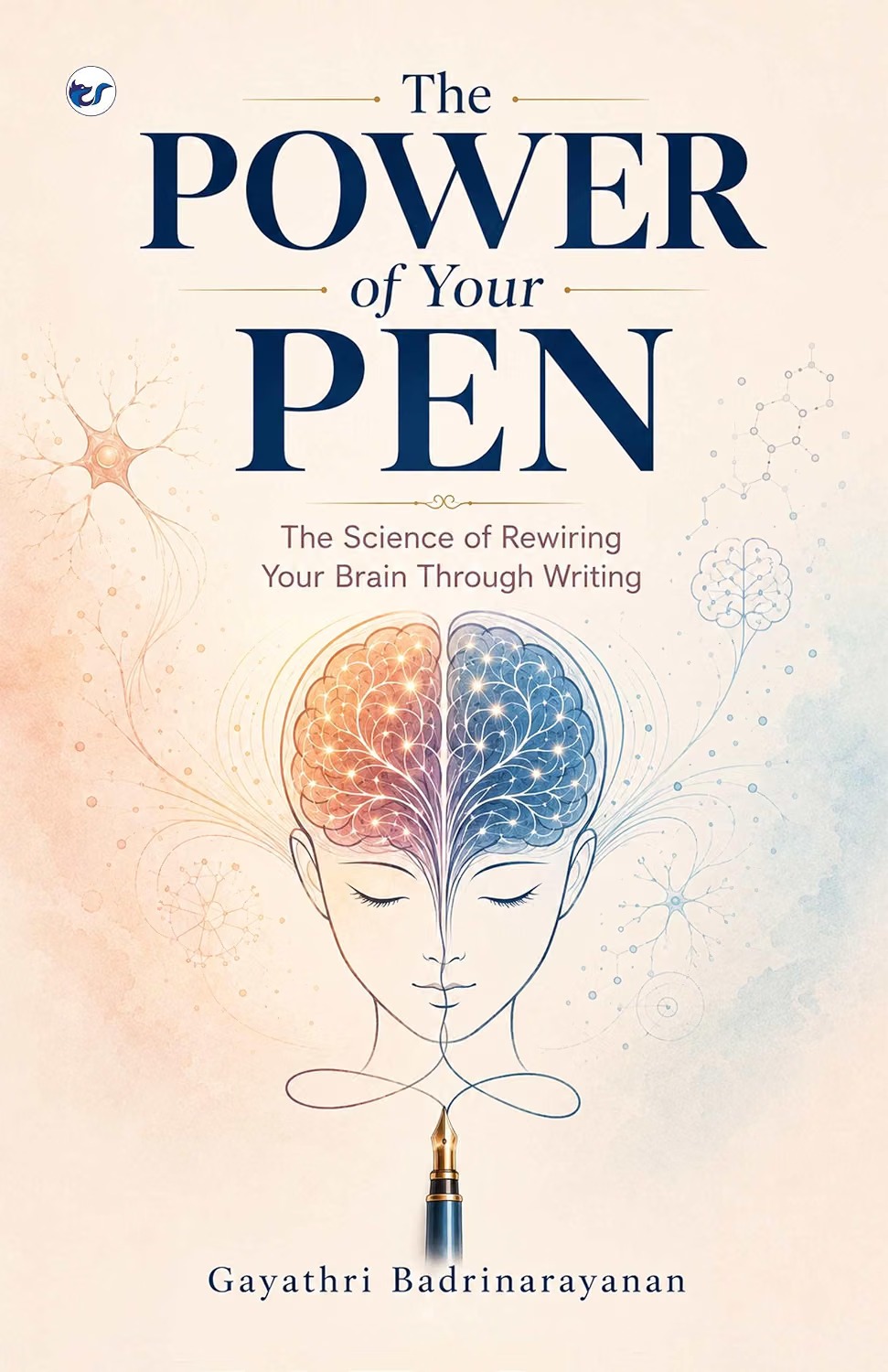
The Power of Your Pen by Gayathri Badrinarayanan is an intriguing and thought-provoking book that invites readers to explore the fascinating connection between the human brain, thoughts, emotions, behavior, and handwriting. At its core, the book encourages us to look beyond what is immediately visible and understand the invisible patterns that influence the way we think, feel, respond, and make decisions.
One of the most interesting questions explored through the book is why two people can experience exactly the same situation yet walk away with completely different emotions, interpretations, decisions, and outcomes. This question forms an engaging starting point for understanding the individuality of the human mind.
The Hidden Patterns Within the Brain
Every person develops certain thought patterns through experiences, emotions, environment, learning, and repeated behavior. Over time, many of these patterns become automatic. We may react to situations without consciously understanding why we responded in a particular way.
The book explores these hidden patterns in an accessible manner and helps readers understand how the brain processes experiences and turns them into habits, perceptions, and behavioral responses. Instead of presenting the human brain as something complicated and distant, Gayathri Badrinarayanan brings these concepts closer to everyday life.
This makes the subject approachable even for readers who may not have a background in psychology or neuroscience.
Thoughts, Emotions, and Behavior
A major strength of the book is the way it connects thoughts, emotions, and actions. Our thoughts can influence our emotions, while our emotions can affect the decisions we make. Repeated responses can eventually become behavioral patterns that influence different areas of our lives.
The book encourages readers to become more aware of these connections. Understanding why we think and behave in certain ways can be an important step toward personal growth.
Rather than simply telling readers how they should think, the book creates an opportunity for self-reflection. It encourages us to observe our own reactions and recognize the patterns that may be operating beneath conscious awareness.
The Fascinating Connection Between Brain and Handwriting
Perhaps one of the most distinctive elements of the book is its exploration of handwriting. The connection between the brain and the movement of the hand provides an interesting perspective on understanding human behavior and expression.
Handwriting is something most people encounter every day, yet few stop to think about the relationship between writing, neurological processes, emotions, and individual patterns. By bringing handwriting into the discussion, the book introduces readers to a different way of looking at human expression.
This aspect adds curiosity to the reading experience and encourages readers to become more observant about themselves and the patterns they display.
Learning Through Stories and Relatable Examples
Another appealing feature of The Power of Your Pen is its use of simple stories and relatable examples. Complex ideas become easier to understand when they are connected to situations that readers can recognize from their own lives.
Instead of making the discussion feel like a textbook, the book presents concepts in a way that encourages curiosity. Readers can relate the ideas to everyday experiences such as relationships, decision-making, emotional reactions, habits, communication, and personal challenges.
This storytelling approach gives the subject a more human and practical dimension.
The Role of Emotional Intelligence
The book also highlights the importance of emotional intelligence in understanding ourselves and others. Being aware of our emotions and recognizing how they influence our reactions can help us respond more thoughtfully to situations.
Emotional intelligence is particularly relevant in everyday life because our relationships and decisions are rarely based on logic alone. Emotions, perceptions, memories, and personal experiences all contribute to how we interpret the world around us.
The book’s discussion encourages readers to develop greater awareness rather than simply reacting automatically.
A Journey Toward Self-Awareness
At its heart, The Power of Your Pen can be viewed as a journey toward greater self-awareness. It encourages readers to ask important questions about themselves: Why do I react this way? What patterns influence my decisions? How do my emotions affect my behavior? Can I become more conscious of the habits that shape my life?
These questions make the book particularly relevant for readers interested in psychology, personal development, neuroscience, emotional intelligence, and human behavior.
An Accessible Approach to a Fascinating Subject
One of the book’s strongest qualities is its ability to make an intellectually interesting subject feel accessible. Concepts related to the brain and behavior can often seem complicated, but the use of everyday examples and simple explanations helps bridge that gap.
The book does not merely focus on the brain as a biological organ. Instead, it explores the relationship between the mind, emotions, perceptions, actions, and patterns, creating a broader perspective on human behavior.
Final Thoughts
The Power of Your Pen by Gayathri Badrinarayanan is an engaging exploration of the hidden forces that influence the way we think, feel, and behave. Its combination of relatable stories, neuroscience, emotional intelligence, and handwriting creates a distinctive approach to understanding the human mind.
The book’s greatest value lies in the questions it encourages readers to ask about themselves. It reminds us that our reactions and habits are often shaped by patterns that we may not consciously recognize.
For readers interested in understanding human behavior, developing self-awareness, exploring emotional intelligence, or simply discovering more about the fascinating relationship between the brain and handwriting, The Power of Your Pen offers an engaging and reflective reading experience.
Ultimately, the book leaves readers with an important idea: understanding the patterns within us can be the beginning of understanding the person we are becoming.