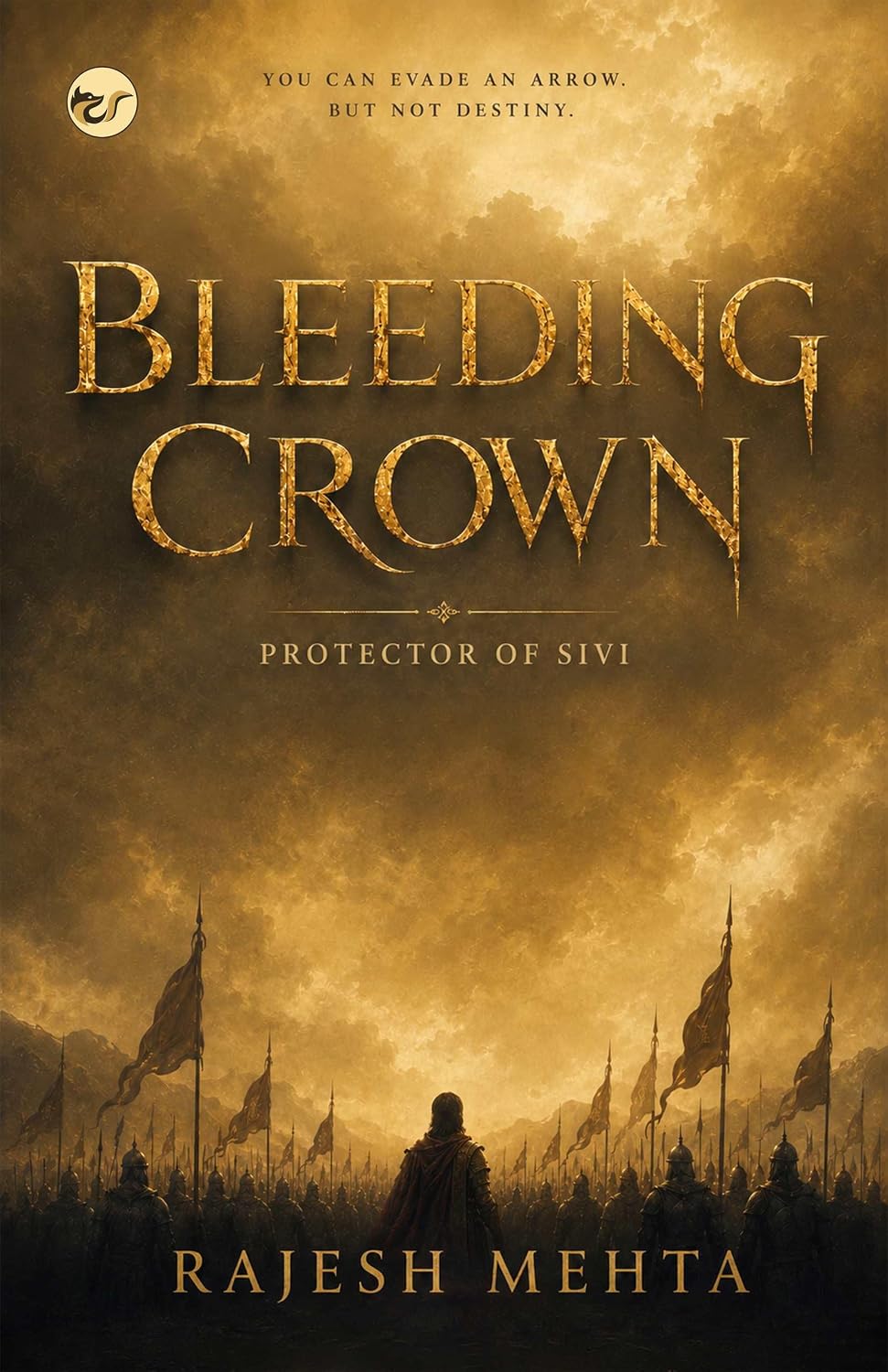
Historical fiction has the unique ability to transport readers into forgotten eras while exploring emotions and conflicts that remain timeless. In Bleeding Crown: Protector of Sivi, author Rajesh Mehta masterfully blends history, mythology, political intrigue, and human drama into an engrossing narrative set in 726 BC. Long before the rise of the Mughals, the Turks, or Alexander the Great, Mehta invites readers into an ancient India where kingdoms flourished, honour was sacred, and every promise carried life-altering consequences.
An Intriguing Premise Rooted in Ancient India
The novel opens in the Kingdom of Sivi, where Prince Vikram stands on the threshold of becoming king. Yet the crown awaiting him is far from a symbol of glory—it is a legacy stained with blood, burdened by unfinished conflicts, and shadowed by destiny. Vikram soon discovers that ruling a kingdom requires more than courage; it demands sacrifices that test his character, convictions, and loyalty.
As alliances crumble, enemies emerge, and broken promises threaten the kingdom’s stability, the story quickly transforms into a gripping tale of survival. The looming threat of war creates an atmosphere of suspense that keeps readers invested from beginning to end.
A Hero Defined by Duty Rather Than Power
Prince Vikram is one of the novel’s greatest strengths. Rather than presenting an invincible warrior, Rajesh Mehta crafts a protagonist who feels remarkably human. Vikram struggles under the immense weight of leadership while attempting to honour conflicting promises and protect his people.
His internal battles are just as compelling as the external conflicts surrounding him. Readers witness his growth from an inexperienced prince into a leader forced to make impossible choices, making his journey emotionally engaging and deeply relatable.
Politics, Strategy, and the Burden of Leadership
One of the novel’s most captivating aspects is its portrayal of ancient political strategy. The Kingdom of Sivi faces financial strain, internal unrest, diplomatic tensions, and the constant threat of invasion. Every decision made by Vikram carries consequences not only for himself but for the entire kingdom.
Rather than simplifying governance into battles alone, Mehta highlights the complexity of leadership—where honour, diplomacy, economics, and military strategy must coexist. This political depth gives the narrative an authenticity that elevates it beyond a conventional historical adventure.
Powerful Female Characters with Their Own Ambitions
The novel also shines through its portrayal of women who refuse to remain confined by societal expectations. The princess’s desire to claim her rightful place on the throne adds another compelling layer to the story.
Her struggle against tradition and her father’s obligations reflects larger questions about power, gender, and succession. Instead of existing merely as a supporting character, she possesses agency, determination, and emotional depth that significantly enrich the narrative.
Love Amidst Chaos
While politics and warfare dominate the storyline, the romantic subplot introduces emotional warmth without overpowering the central narrative. The possibility that love may end before it truly begins creates a bittersweet tension that mirrors the uncertainty surrounding every character.
Rajesh Mehta wisely keeps the romance understated, allowing it to complement rather than distract from the larger themes of destiny and duty.
Mythology Meets Historical Fiction
Perhaps the novel’s most fascinating dimension is its seamless integration of mythology into historical storytelling. The emergence of a banished race seeking revenge and the lingering echoes of the Mahabharata add an epic quality that expands the narrative beyond the Kingdom of Sivi itself.
Rather than using mythology merely as decoration, Mehta incorporates it into the story’s emotional and political framework. The result is a rich narrative where ancient legends influence present-day events, reminding readers that history often carries the weight of unresolved grievances.
Immersive World-Building and Engaging Writing
Rajesh Mehta vividly recreates the landscapes, royal courts, traditions, and battlefields of ancient India. His descriptions are detailed enough to immerse readers without slowing the pace of the story.
The dialogue reflects the honour-bound culture of the era while remaining natural and accessible to modern audiences. Action sequences are energetic, political discussions are thought-provoking, and quieter emotional moments provide balance throughout the novel.
Themes That Continue to Resonate
Beyond its historical backdrop, Bleeding Crown: Protector of Sivi explores universal themes that remain relevant today. Honour, loyalty, sacrifice, destiny, leadership, and the consequences of broken promises form the emotional backbone of the story.
The recurring idea that destiny cannot be outrun gives the novel a philosophical depth that lingers long after the final chapter. Every character must confront difficult choices, reminding readers that true leadership often demands painful sacrifices.
Final Verdict
Bleeding Crown: Protector of Sivi is a richly imagined historical epic that successfully combines ancient Indian history, mythology, political intrigue, and emotional storytelling. Rajesh Mehta delivers a narrative filled with memorable characters, meaningful conflicts, and immersive world-building that keeps readers invested throughout.
Fans of historical fiction, epic fantasy grounded in history, and stories exploring honour, destiny, and kingship will find much to admire in this novel. More than a tale of war and royal succession, Bleeding Crown is a powerful exploration of how promises shape lives, how history echoes across generations, and how destiny ultimately demands its due.