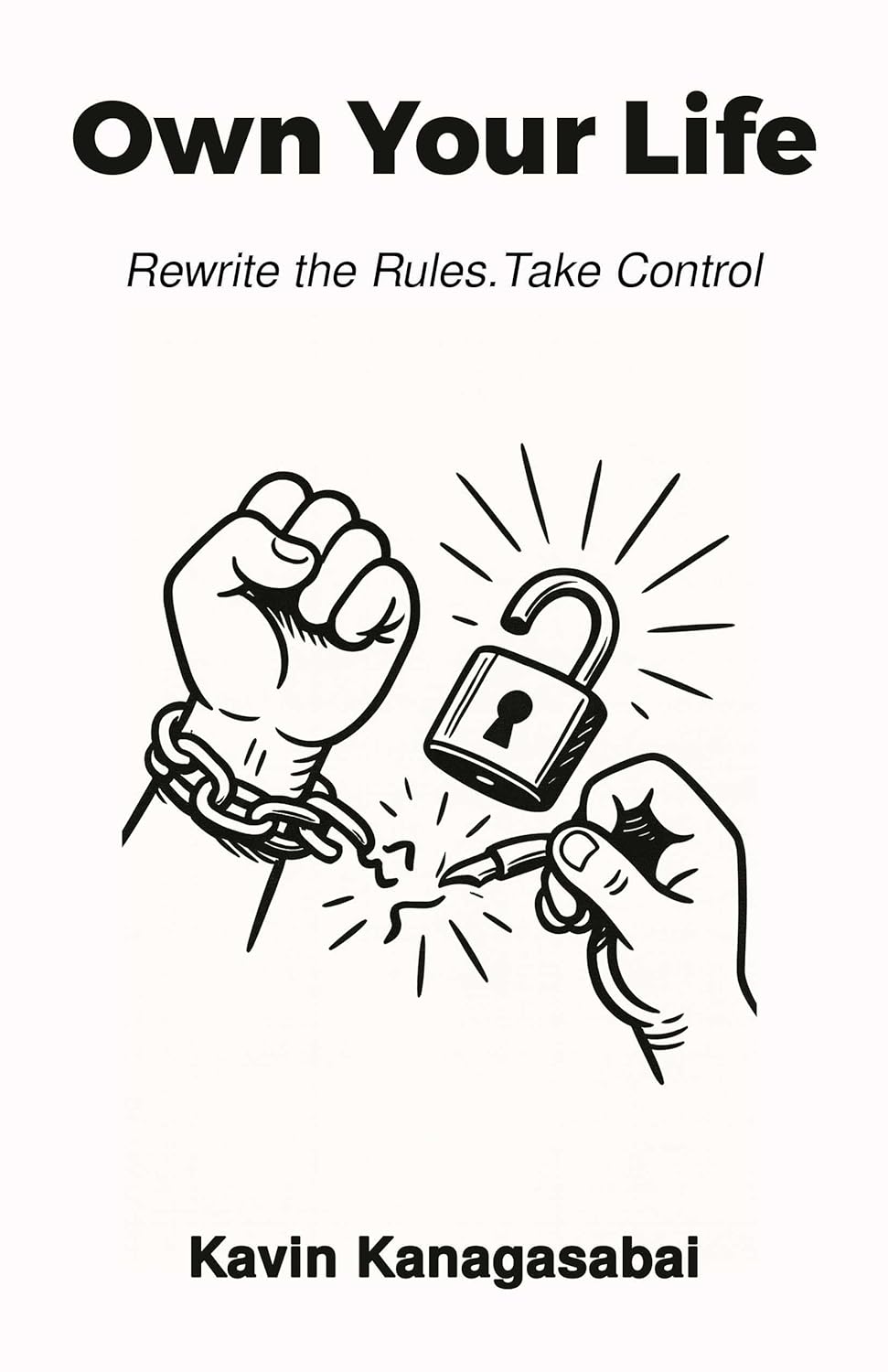
Own Your Life: In a self-help landscape drowning in affirmations, gratitude journals, and promises of effortless transformation, Own Your Life: Rewrite the Rules. Take Control by Kavin Kanagasabai arrives like a bucket of cold water: shocking, uncomfortable, and exactly what many people need.
This is not a book that will tell you you’re perfect just as you are. It will not promise that manifesting abundance is just one vision board away. And it absolutely will not offer you a comfortable escape from the reality that your life, right now, in this moment, is largely the result of choices you have made or failed to make.
If that sounds harsh, it’s because it is. And that’s precisely the point.
Honesty Over Comfort
What sets Own Your Life apart from the countless self-help books cluttering bookstore shelves is its unflinching commitment to honesty. Kanagasabai doesn’t waste time with motivational fluff or feel-good platitudes designed to make readers feel better without actually changing anything. Instead, he presents a direct, sometimes brutally candid examination of why people get stuck, what keeps them from changing, and what genuine forward movement actually requires.
Own Your Life central thesis is deceptively simple: you are responsible for your life. Not your circumstances, not your past, not the people who hurt you or the opportunities you didn’t get. You. Right now. With the choices you make today.
This isn’t about victim-blaming or dismissing the very real challenges people face. It’s about drawing a clear line between what you can control and what you cannot, and then focusing your energy ruthlessly on the former. Kanagasabai acknowledges that life is unfair, that some people start with advantages others never have, and that trauma and hardship leave real scars. But he also insists, with relentless clarity, that dwelling on these truths changes nothing. Action does.
Why We Stay Stuck
Own Your Life most valuable contributions is its examination of the psychological mechanisms that keep people trapped in patterns they claim to want to escape. Kanagasabai doesn’t accept surface-level explanations. He digs into the uncomfortable truth that many people are stuck not because change is impossible, but because staying stuck is easier: more familiar, less frightening, requiring less risk and less discomfort.
He explores the ways we lie to ourselves: the excuses we dress up as reasons, the blame we shift to others, the “somedays” we hide behind to avoid the terror of “today.” This section will make many readers squirm, and that discomfort is the book’s greatest strength. Real change, Kanagasabai argues, begins with honest self-assessment, and honesty, particularly with ourselves, is rarely comfortable.
The book challenges readers to examine their own complicity in their dissatisfaction. Are you genuinely trying to change, or are you simply rehearsing the performance of trying? Are you taking real action, or are you consuming content about action as a substitute for actually doing anything? These are hard questions. Own Your Life doesn’t let you avoid them.
The Seven Mindsets
The second half of the Own Your Life shifts from diagnosis to framework, presenting seven mindsets designed to help readers sustain direction when circumstances become uncertain or overwhelming. Importantly, Kanagasabai does not present these as rigid rules to follow or magic formulas that guarantee success. They are, instead, practical ways of thinking: mental tools that help you respond more effectively when old habits reassert themselves, which they inevitably will.
What makes these mindsets valuable is their grounding in realism. They acknowledge that motivation fades, that discipline wavers, that setbacks happen, and that clarity is often temporary. The mindsets aren’t about achieving some mythical state of constant determination. They’re about building the capacity to act even when you don’t feel like it, to continue even when progress is invisible, and to choose deliberately even when every familiar impulse pulls you back toward comfort.
Each mindset is explored with practical examples and clear reasoning, avoiding both academic abstraction and empty inspiration. They feel less like lessons from a guru and more like hard-won insights from someone who has actually done the difficult work of changing their own life and understands how unglamorous that process really is.
Who Should Read Own Your Life
Own Your Life is not for everyone. If you’re looking for validation, comfort, or reassurance that everything will work out without significant effort on your part, this book will disappoint you. If you want someone to tell you that your struggles aren’t your fault and that healing means being gentle with yourself indefinitely, look elsewhere.
But if you’re tired of spinning your wheels, tired of the same patterns producing the same results, tired of waiting for circumstances to change before you do, this book Own Your Life will meet you exactly where you need to be met. It’s for people ready to stop performing the appearance of self-improvement and start doing the actual, uncomfortable work of changing how they think and act.
It’s for those who suspect, perhaps quietly, that they’ve been lying to themselves about why their life looks the way it does. For those ready to trade comfortable delusions for hard truths. For those willing to accept that no one is coming to save them, that there is no perfect moment to begin, and that the only way out is through.
The Verdict
Own Your Life: Rewrite the Rules. Take Control is a rare achievement in the self-help genre: a book that respects its readers enough to tell them the truth rather than what they want to hear. Kavin Kanagasabai has written a guide for adults who are ready to stop blaming and start building, who understand that freedom and responsibility are inseparable, and who are willing to do the unglamorous, daily work of becoming the person capable of living the life they claim to want.
It won’t inspire you with soaring rhetoric or move you with touching stories. What it will do, if you let it, is challenge every comfortable excuse you’ve been using to avoid taking control of your life. And for readers ready for that challenge, it may be one of the most important books they ever read.