The Non-Verbal Way: 7 Powerful Insights to Read People Better, Lead People Better & Master Non-Verbal Communication
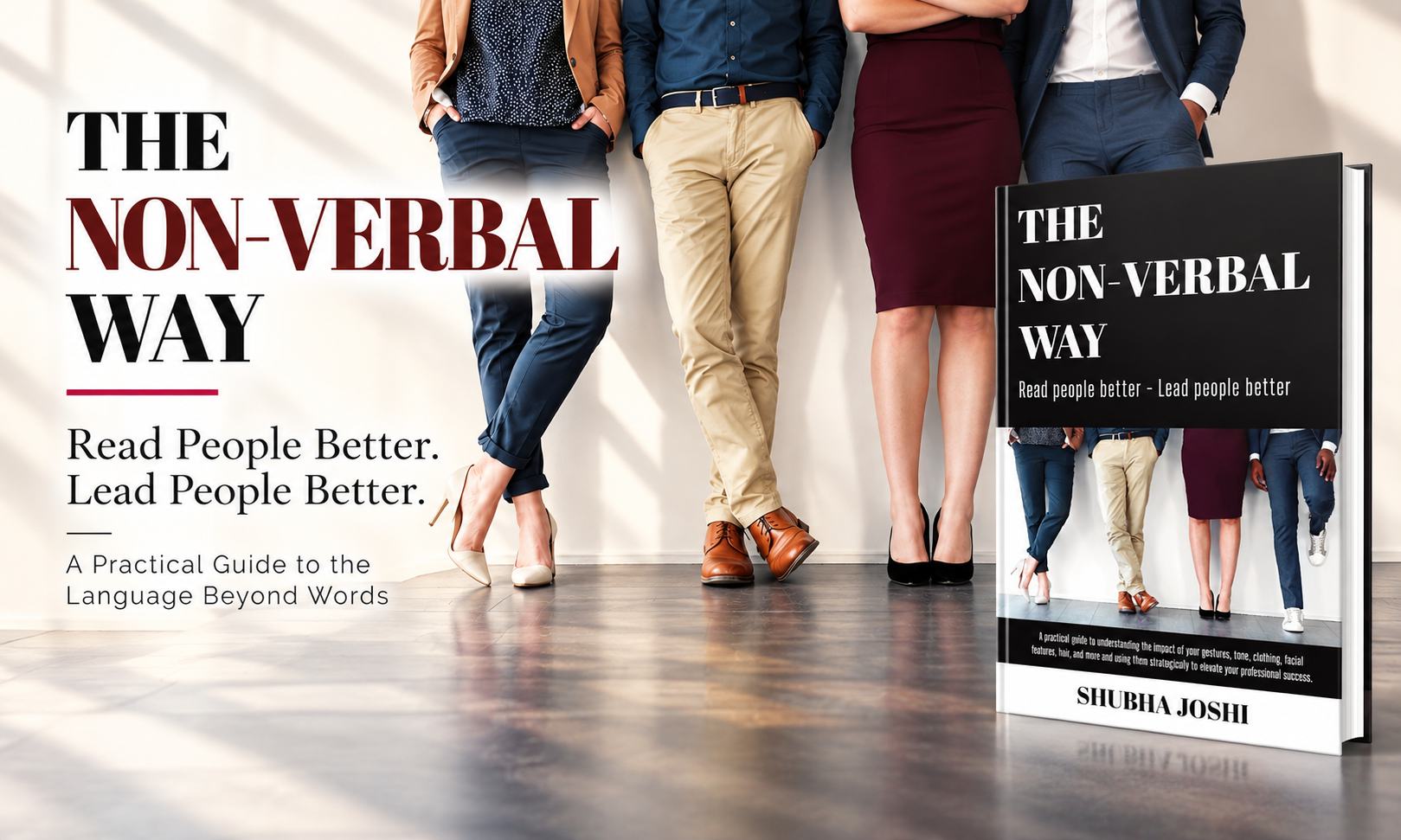
In everyday life, communication is about much more than words. A facial expression, gesture, posture, tone of voice, or moment of eye contact can communicate confidence, discomfort, trust, hesitation, or interest before a single sentence is spoken. The Non-Verbal Way: Read People Better. Lead People Better by Shubha Joshi explores the fascinating world of non-verbal communication and explains how understanding body language can improve personal and professional interactions.
Understanding Non-Verbal Communication and Body Language
Non-verbal communication plays an important role in the way people connect, respond, and form impressions. In The Non-Verbal Way, Shubha Joshi examines how body language, facial expressions, posture, gestures, eye contact, appearance, and voice can influence communication.
The book introduces readers to the idea that people often communicate emotions and intentions through signals that exist beyond spoken language. Understanding these signals can help individuals become more observant and intentional in their interactions.
For professionals, leaders, entrepreneurs, students, and anyone interested in improving communication skills, this awareness can become a valuable personal development tool.
The Psychology Behind Body Language
One of the notable aspects of the book is its connection between body language psychology, behavioral psychology, and emotional intelligence. Human interactions often involve quick judgments, emotional reactions, and subtle behavioral signals.
The book explores how first impressions are formed and how seemingly small details can influence the way a person is perceived. Readers are encouraged to pay attention to facial expressions, changes in posture, eye movements, gestures, and vocal tone while also considering the surrounding context.
This approach makes the subject of body language easier to understand for readers who may be encountering non-verbal intelligence for the first time.
Learning to Read People Better
The title’s central idea—“Read People Better. Lead People Better.”—captures the practical purpose of the book.
Being able to observe people carefully can support better interpersonal communication. Whether it is a job interview, business meeting, presentation, negotiation, networking event, or personal conversation, recognizing non-verbal cues can help individuals respond more thoughtfully.
The book also discusses microexpressions and emotional cues, encouraging readers to become more attentive to subtle changes in behavior. Rather than relying only on spoken words, readers learn to consider the broader communication picture.
Building Confidence Through Non-Verbal Communication
Another important theme is confidence and personal presence. The way people carry themselves can influence how they are perceived by others. Posture, eye contact, gestures, facial expressions, and voice can all contribute to an individual’s overall presence.
For people preparing for interviews, presentations, meetings, public speaking, and leadership roles, becoming more conscious of these elements can help create greater alignment between what they intend to communicate and what others actually perceive.
The book therefore connects non-verbal communication skills with confidence, executive presence, and professional communication.
Emotional Intelligence and Better Relationships
Effective communication also requires emotional awareness. The Non-Verbal Way connects non-verbal intelligence with emotional intelligence, encouraging readers to observe not only what others communicate but also their own emotional responses.
This can be particularly useful in personal relationships and professional environments where misunderstandings can arise easily. Recognizing changes in tone, facial expression, posture, or behavior can encourage people to pause, listen, and respond with greater awareness.
In this sense, the book presents emotional intelligence and communication skills as complementary abilities that can strengthen interpersonal relationships.
A Personal Journey Behind the Lessons
What gives the book an additional layer of relatability is Shubha Joshi’s personal journey. Her experiences with self-doubt, resilience, and personal growth add a human dimension to the discussion of non-verbal intelligence and confidence.
Instead of presenting body language as simply a collection of gestures and rules, the book connects communication with the broader experience of personal development. This makes the subject approachable for readers who want to improve not only how they communicate but also how they present themselves.
Who Should Read The Non-Verbal Way?
The Non-Verbal Way: Read People Better. Lead People Better can be relevant to a wide range of readers, including:
- Professionals looking to improve workplace communication
- Leaders interested in developing stronger interpersonal skills
- Entrepreneurs and business owners
- Students preparing for interviews and professional environments
- Public speakers and presenters
- Individuals interested in body language psychology
- Readers exploring emotional intelligence and personal development
- Anyone who wants to understand people and communication more effectively
Why Non-Verbal Communication Matters
In a world where professional and personal interactions increasingly happen across different settings, effective communication skills remain essential. Words provide information, but non-verbal signals often influence how that information is received.
The Non-Verbal Way encourages readers to become more conscious of these silent messages. From maintaining appropriate eye contact to understanding posture, facial expressions, gestures, and tone, the book provides a practical perspective on how non-verbal communication shapes everyday interactions.
Rather than focusing solely on speaking confidently, it encourages readers to consider the complete communication experience—what they say, how they say it, and what their body communicates at the same time.
Final Thoughts
The Non-Verbal Way: Read People Better. Lead People Better by Shubha Joshi offers an accessible exploration of non-verbal communication, body language, emotional intelligence, communication skills, confidence, and leadership presence.
Through practical insights, examples, exercises, and personal experiences, the book encourages readers to observe more carefully and communicate more intentionally. For anyone seeking to read people better, improve body language, build confidence, strengthen communication skills, and create better personal or professional connections, this book provides a practical introduction to the silent language that surrounds every interaction.
Published by Clever Fox Publishing
Available now: https://amzn.in/d/0c3pXTt1