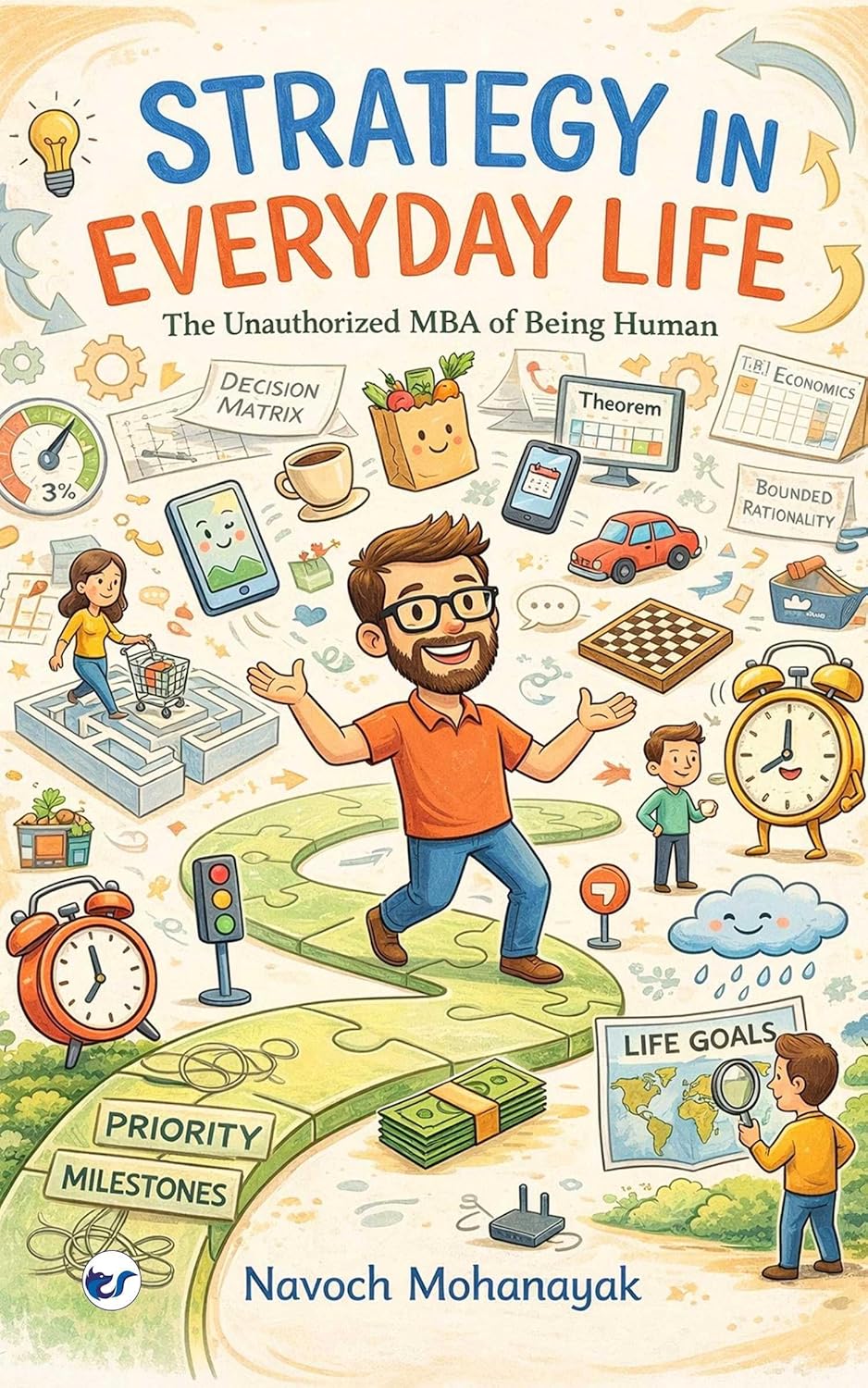
In an era where self-help books endlessly preach discipline, hustle, and productivity, Strategy in Everyday Life: The Unauthorized MBA of Being Human offers a refreshingly different perspective. Instead of blaming people for being lazy or unmotivated, the book argues that most individuals suffer from something far deeper: poor strategy. This central idea becomes the foundation of a thought-provoking and intellectually engaging exploration of human behavior, decision-making, and modern life.
What makes this book stand out is its ability to combine concepts from business strategy, economics, psychology, and game theory and apply them to ordinary human experiences. Rather than limiting strategic thinking to boardrooms and corporations, the author brings these frameworks into everyday life — habits, relationships, procrastination, emotional patterns, and personal priorities. The result is a book that feels less like motivational advice and more like a mirror reflecting uncomfortable truths.
Productivity Without Purpose
One of the book’s strongest themes is its criticism of modern productivity culture. Society often celebrates people for being busy, multitasking constantly, and trying to fit “just one more thing” into their schedules. However, the author argues that productivity without direction becomes self-destruction. People optimise their calendars, complete endless tasks, and remain active throughout the day, yet still feel emotionally exhausted and dissatisfied.
The book explains that being efficient does not necessarily mean being effective. Many individuals become experts at managing distractions instead of eliminating them. They solve small problems repeatedly while ignoring the larger issues shaping their lives. This insight is particularly powerful because it forces readers to question whether their daily routines are truly meaningful or simply well-organised chaos.
The Psychology of Self-Sabotage
Another compelling aspect of the book is its exploration of cognitive biases and emotional decision-making. The author explains how people often defend choices they already know are unhealthy because those decisions protect their comfort, identity, or ego. Rather than presenting mistakes as accidents, the book frames them as repeated strategic patterns.
The discussion around overthinking, procrastination, and rationalisation feels especially relevant in today’s fast-paced world. The author argues that overthinking is often disguised avoidance, while constant busyness can become an escape from meaningful reflection. Many readers will likely recognise themselves in these observations, which is what makes the book emotionally impactful.
The book also explores how familiarity is often mistaken for safety. People continue unhealthy routines, relationships, or habits not because they are beneficial, but because they are predictable. This psychological insight adds emotional depth to the book and separates it from traditional productivity-focused self-help literature.
Game Theory in Real Life
Perhaps the most unique element of the book is its use of game theory to explain everyday interactions and relationships. Instead of treating conversations and conflicts as purely emotional experiences, the author examines them as repeated strategic exchanges shaped by incentives, reactions, and expectations.
The book explains why people repeatedly experience the same arguments, misunderstandings, or emotional patterns in relationships and workplaces. It shows how human beings unconsciously train others through predictable responses and repeated behaviors. This perspective encourages readers to stop viewing conflicts as isolated incidents and start recognising the systems behind them.
What makes these sections effective is that the concepts never feel overly academic. Complex theories are explained through relatable examples, making them easy to understand while still intellectually stimulating.
Opportunity Cost and Everyday Decisions
A particularly powerful concept explored in the book is opportunity cost. The author reminds readers that every decision carries a hidden cost because choosing one thing always means sacrificing another. Time spent endlessly scrolling on social media, avoiding difficult conversations, or saying yes to unnecessary commitments quietly shapes future outcomes.
This idea encourages readers to evaluate their choices differently. Instead of simply asking, “What do I want right now?” the book pushes them to ask, “What future am I reinforcing with this decision?” This shift in perspective transforms even small daily habits into meaningful strategic choices.
Writing Style and Overall Impact
The writing style is sharp, intelligent, and intentionally uncomfortable. The author avoids the overly motivational tone commonly found in self-help books and instead focuses on honesty and analysis. While the book can feel emotionally intense at times, that discomfort is also what makes it memorable.
Rather than offering unrealistic solutions or instant transformation, the book encourages awareness. It challenges readers to recognise the invisible systems influencing their lives and to think more critically about their actions, priorities, and patterns.
Conclusion
Strategy in Everyday Life: The Unauthorized MBA of Being Human is an insightful and original book that successfully combines strategy, psychology, and behavioral science into a compelling analysis of modern human behavior. It challenges readers to stop confusing movement with progress and to examine the deeper logic behind their decisions. Thought-provoking, brutally honest, and highly relevant, this book offers a powerful reminder that the quality of life is often shaped not by discipline alone, but by the strategies people unconsciously follow every day.