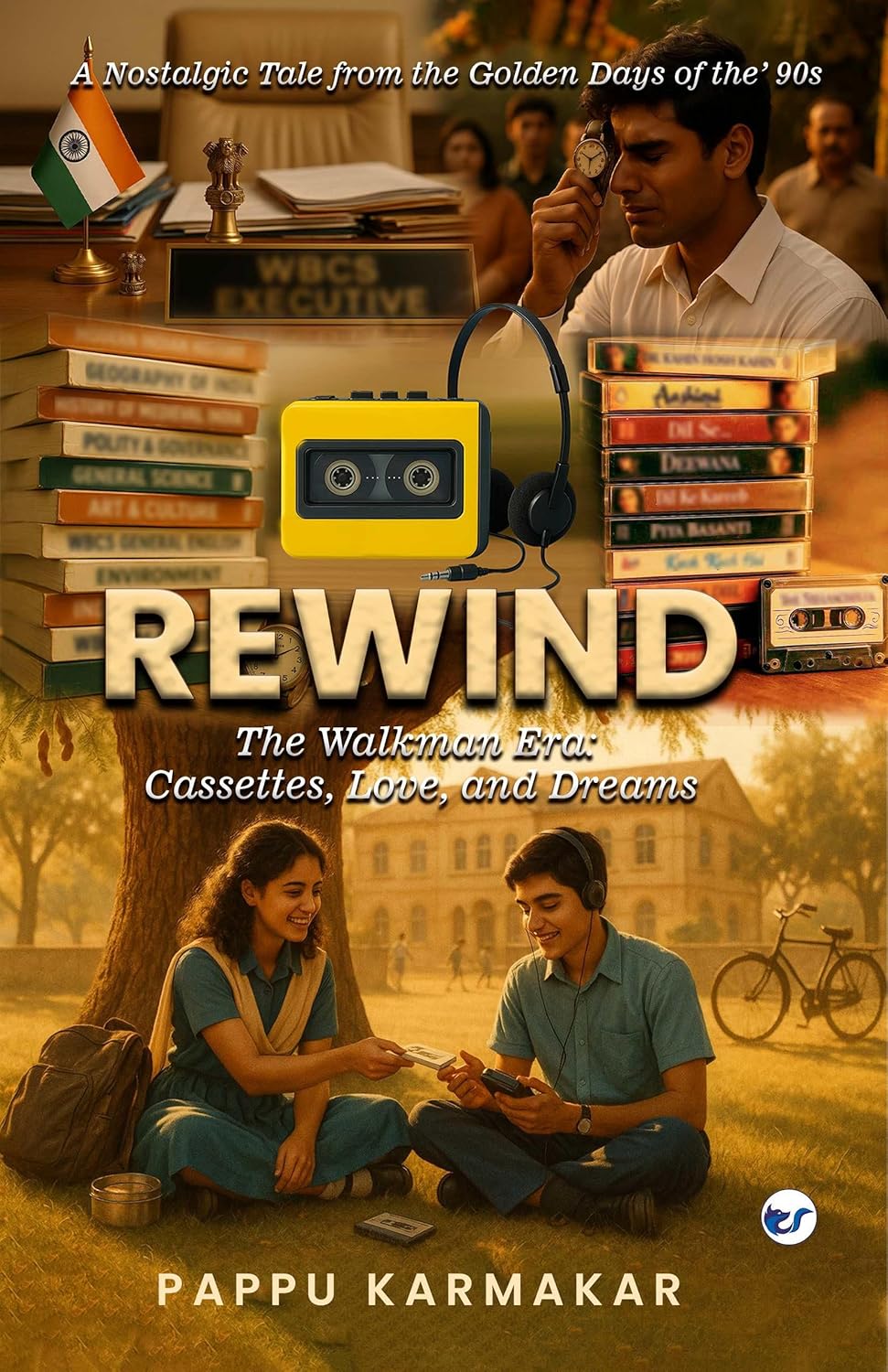
In a world filled with digital distractions and fast-paced living, Rewind: The Walkman Era: Cassettes, Love, and Dreams by Pappu Karmakar offers readers a refreshing return to a simpler and more emotional time. Set in the late 1990s in a small town in West Bengal, the novel beautifully captures the nostalgia of the Walkman generation — a period when music was deeply personal, friendships were genuine, and emotions were expressed through songs and silence rather than social media.
The story follows Aakash and Rohini, two young individuals brought together by their shared love for music. Through cassette tapes, melodies, and countless heartfelt moments, their friendship slowly blossoms into a deep emotional bond. The author presents their relationship with honesty and simplicity, making it relatable and emotionally engaging from the very beginning.
A Heartfelt Story of Friendship and Love
One of the greatest strengths of the novel is the emotional authenticity of the characters. Aakash and Rohini feel real because their connection develops naturally. Their bond is not built on dramatic moments but on quiet companionship, shared interests, and emotional understanding. This simplicity gives the story a warm and realistic charm that readers can easily connect with.
Pappu Karmakar beautifully portrays the innocence of first love and youthful emotions. Readers can feel the comfort, happiness, and emotional security the two characters find in each other’s company. Their relationship becomes the emotional core of the story, making every joyful moment touching and every painful moment heartbreaking.
Nostalgia That Feels Warm and Real
The novel shines brilliantly in its nostalgic portrayal of the 90s. From the excitement of listening to favorite songs on a Walkman to carefully preserving cassette tapes, every detail is described with emotional warmth. Readers who grew up during that era will instantly feel connected to the memories the book revives, while younger readers will discover the emotional beauty of a time when life felt slower yet more meaningful.
The Walkman and cassettes are more than just objects in the story; they symbolize memories, emotions, and personal connections. The author successfully transforms music into a living presence throughout the narrative. Every melody carries emotions, every song reminds the characters of moments they cannot forget, and every cassette becomes a container of memories.
This nostalgic atmosphere is what makes the novel emotionally powerful. It reminds readers of a generation where music was not simply entertainment but a companion during happiness, loneliness, love, and heartbreak.
A Journey Through Pain and Ambition
As the story progresses, fate creates distance between Aakash and Rohini, leaving Aakash heartbroken and emotionally lost. The pain of separation is portrayed with sincerity and emotional restraint, which makes it even more impactful. Instead of relying on exaggerated drama, the author focuses on silent emotions, unanswered feelings, and the loneliness that follows heartbreak.
The narrative then shifts as Aakash moves to Kolkata to pursue his dream of becoming a WBCS officer. This transition adds maturity and emotional depth to the story. Kolkata becomes a place of struggle, ambition, and transformation where Aakash learns to rebuild his life while carrying the memories of his past.
The balance between romance and personal growth is one of the novel’s strongest qualities. It shows that life continues despite emotional pain and that dreams can become a source of healing and strength. Readers witness Aakash evolve emotionally and mentally, making his journey both inspiring and relatable.
Music as the Soul of the Novel
Music remains the emotional heartbeat of Rewind. The author beautifully explores how songs can preserve memories and reconnect people even after years of separation. Certain melodies in the story become symbols of love, longing, and hope, creating a deeply emotional reading experience.
The title itself carries symbolic meaning. Just like rewinding a cassette tape to replay a favorite song, the characters revisit memories that continue to shape their lives. The novel reminds readers that while time moves forward, certain emotions remain timeless forever.
Readers who have ever connected songs with memories from their own lives will especially appreciate this emotional depth. The relationship between music and memory is portrayed with great sensitivity and realism.
Final Verdict
Overall, Rewind: The Walkman Era: Cassettes, Love, and Dreams is a touching and emotionally rich novel that beautifully blends nostalgia, romance, heartbreak, and hope. Through simple yet powerful storytelling, Pappu Karmakar creates characters and emotions that stay with readers long after the story ends. The novel is not only a tribute to the Walkman era but also a reminder of how music and memories can shape our lives forever. For readers who enjoy heartfelt emotional journeys filled with nostalgia and meaningful relationships, this book offers a memorable and deeply satisfying reading experience.